
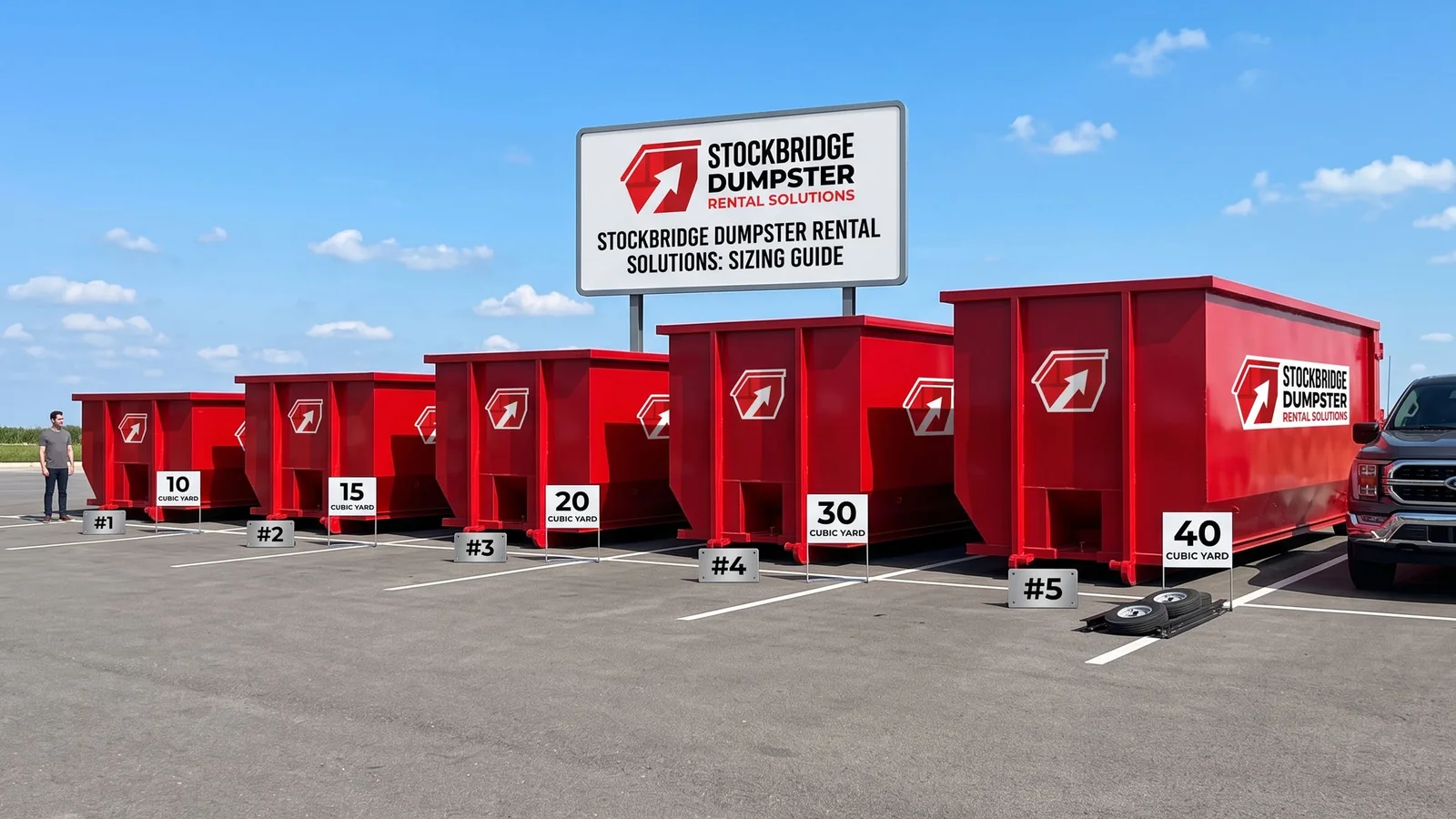
Sizing Guide
How to Choose the Right Dumpster Size
The single most common question we get — and the one that saves you the most money when you get it right. Here's how to size a dumpster like a pro.
Call & book in minutes On-time roll-off delivery Transparent flat rates
Sizing Guide
Updated June 2026
7 min read
By Marcus Bellamy
Renting a dumpster should be the easy part of any project, but it trips people up more than almost anything else — and it usually comes down to one decision: what size do I actually need? Choose too small and you're paying for a second container or a swap. Choose too big and you've rented expensive empty air. After more than a decade and thousands of deliveries across Henry County, we've turned sizing into something close to a science, and this guide hands you the same logic we use on the phone every day.
First, Understand What "Yards" Actually Means
The number attached to a roll-off dumpster — 10, 20, 40 — refers to its volume in cubic yards, not tons, not feet, not how many trash bags it holds. One cubic yard is roughly the volume of a standard washing machine, or about nine of those 42-gallon contractor bags. So a 20 yard dumpster holds the equivalent of about twenty washing machines' worth of debris, or roughly six full-size pickup truck loads.
This matters because people instinctively think about size in terms of footprint. In reality, most of our containers share a similar length and width — what changes is the height of the walls. A 20, 30, and 40 yard often sit on nearly the same footprint; the bigger numbers just stack taller. That's great news if your driveway is average-sized: you can get far more capacity without taking up more ground.
The Five Sizes, and What Each One Is Really For
Here's the honest, project-first breakdown we use:
10 Yard — The Heavy-Debris Specialist
Small in volume but mighty in the right situation. The 10 yard is the container to choose when your debris is heavy rather than bulky — concrete, brick, dirt, tile. These materials hit a dumpster's weight limit long before they fill it, so a bigger box would be a liability, not a help. Also ideal for a single small room, a modest bathroom remodel, or a focused garage corner.
15 Yard — The Versatile Middle
The 15 yard is the "just right" size for a huge share of home projects: multi-room flooring removal, a deck teardown, a full two-car garage cleanout. It carries a genuine amount of mixed debris while still tucking neatly onto a standard driveway.
20 Yard — The Most Popular Choice
If you take one number away from this article, make it 20. The 20 yard is our most-rented size because it fits the widest range of jobs — whole-home cleanouts, roof tear-offs, large room remodels, big pre-move purges — while remaining easy to place and load. When you're genuinely unsure, this is the safe bet.
30 Yard — The Renovation Workhorse
When a project produces a continuous stream of bulky debris, the 30 yard earns its keep. Whole-house remodels, additions, new construction, and large cleanouts all benefit from the extra vertical capacity — and for contractors, fewer swaps means crews keep working.
40 Yard — Maximum Volume
Our largest container, the 40 yard, is built for demolition, commercial jobs, and the biggest cleanouts. It's strictly for light, bulky material — never concrete or dirt, which would blow past the weight limit at a fraction full.
The Rule Most People Get Wrong: Weight vs. Volume
This is where sizing goes sideways. Every dumpster comes with an included weight allowance (measured in tons), separate from its volume. Two projects can fill the same-size container while one is perfectly fine and the other racks up overage charges — because of what's inside.
Rule of thumb: Dense material (concrete, dirt, brick, wet roofing) → smaller container, mind the weight. Light, bulky material (furniture, cabinetry, framing, packaging) → bigger container, fill it up. Match the box to the type of debris, not just the amount.
This is exactly why we'll sometimes talk a customer down to a smaller dumpster. If you're demolishing a concrete patio, a 40 yard would be a costly mistake — you'd hit the weight ceiling with the container barely a third full. A 10 yard is both cheaper and correct.
Want a recommendation in seconds? Call (470) 878-2988 for a flat quote and fast delivery anywhere in the Stockbridge area — we'll help you pick the right container in one quick conversation.
A Quick Sizing Cheat Sheet by Project
- Single room cleanout / small bathroom: 10–15 yard
- Two-car garage or basement: 15–20 yard
- Whole-home cleanout or move-out: 20 yard
- Roof replacement (typical home): 20 yard (watch weight)
- Concrete, dirt, or heavy demo: 10 yard
- Kitchen + multi-room remodel: 20–30 yard
- Whole-house renovation / new build: 30 yard
- Commercial cleanout / demolition: 40 yard
Three Sizing Mistakes to Avoid
1. Sizing for volume when weight is the limit. The most expensive error there is. If your load is heavy, the weight allowance — not the walls — decides your size.
2. Rounding down to save a few dollars. The price gap between adjacent sizes is almost always smaller than the cost of renting a second dumpster because the first filled up. When you're between two sizes, size up.
3. Forgetting delivery clearance. A roll-off needs roughly its own length plus about 20 feet for the truck, and around 15 feet of overhead clearance free of wires and low branches. We'll confirm on delivery, but it's worth eyeing the spot in advance.
When in Doubt, Just Ask
Honestly, the fastest way to get this right is to describe your project to someone who sizes dumpsters for a living. Tell us the type of work, the rough amount, and the heaviest thing going in, and we'll name the ideal size in seconds — because we'd rather you rent the right container once than the wrong one twice. Explore every option on our dumpster sizes page, or read up on what can and can't go in a dumpster before you load.
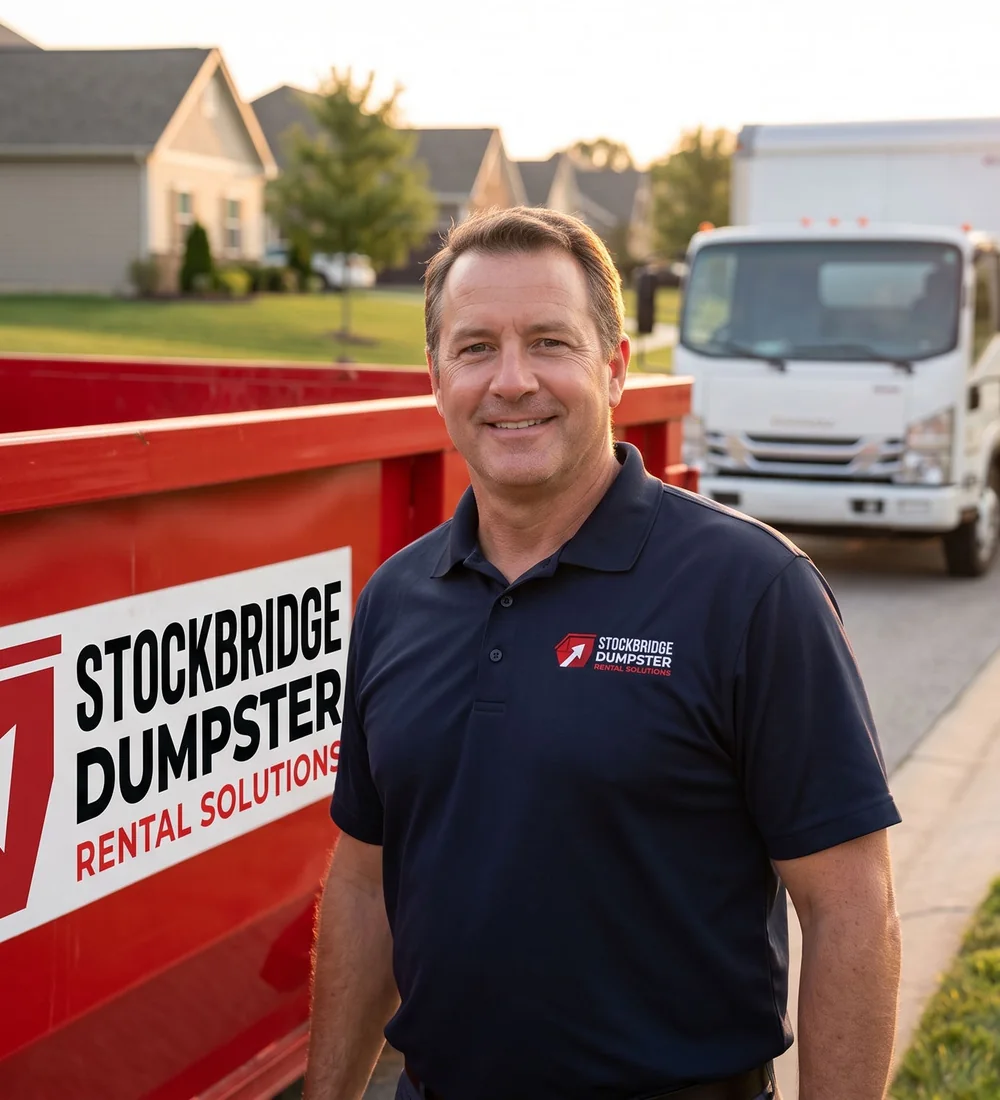
Written by Marcus Bellamy
Owner of Stockbridge Dumpster Rental Solutions, with over a decade of hands-on experience sizing, delivering, and hauling roll-off dumpsters across Henry County, GA.
FAQs
Choosing a Dumpster Size — FAQs
What is the most common dumpster size for homeowners?
The 20 yard is by far the most popular for homeowners. It handles whole-home cleanouts, roofing, and large remodels while still fitting a standard driveway.
What size dumpster do I need for a roof replacement?
Most residential re-roofs fit a 20 yard, but shingles are heavy, so weight is the real constraint. Tell us the roof's square footage and number of layers and we'll confirm the right size.
Can I put concrete in any size dumpster?
Technically yes, but you shouldn't put it in a large one. Concrete is extremely heavy and should go in a 10 yard to stay within the weight limit. A big container full of concrete can't be legally or safely hauled.
What happens if I choose a dumpster that's too small?
No disaster — we can deliver a second container or arrange a swap, often same-day. But it's more economical to size correctly upfront, which is why we're glad to help you choose.
Keep Reading
More Dumpster Rental Guides
How Much Does Dumpster Rental Cost in Georgia?
Read articleDo You Need a Permit for a Dumpster in Stockbridge?
Read articleStill Not Sure What Size You Need?
Skip the guesswork. Call and describe your project — we'll recommend the perfect size in under a minute.
(470) 878-2988