
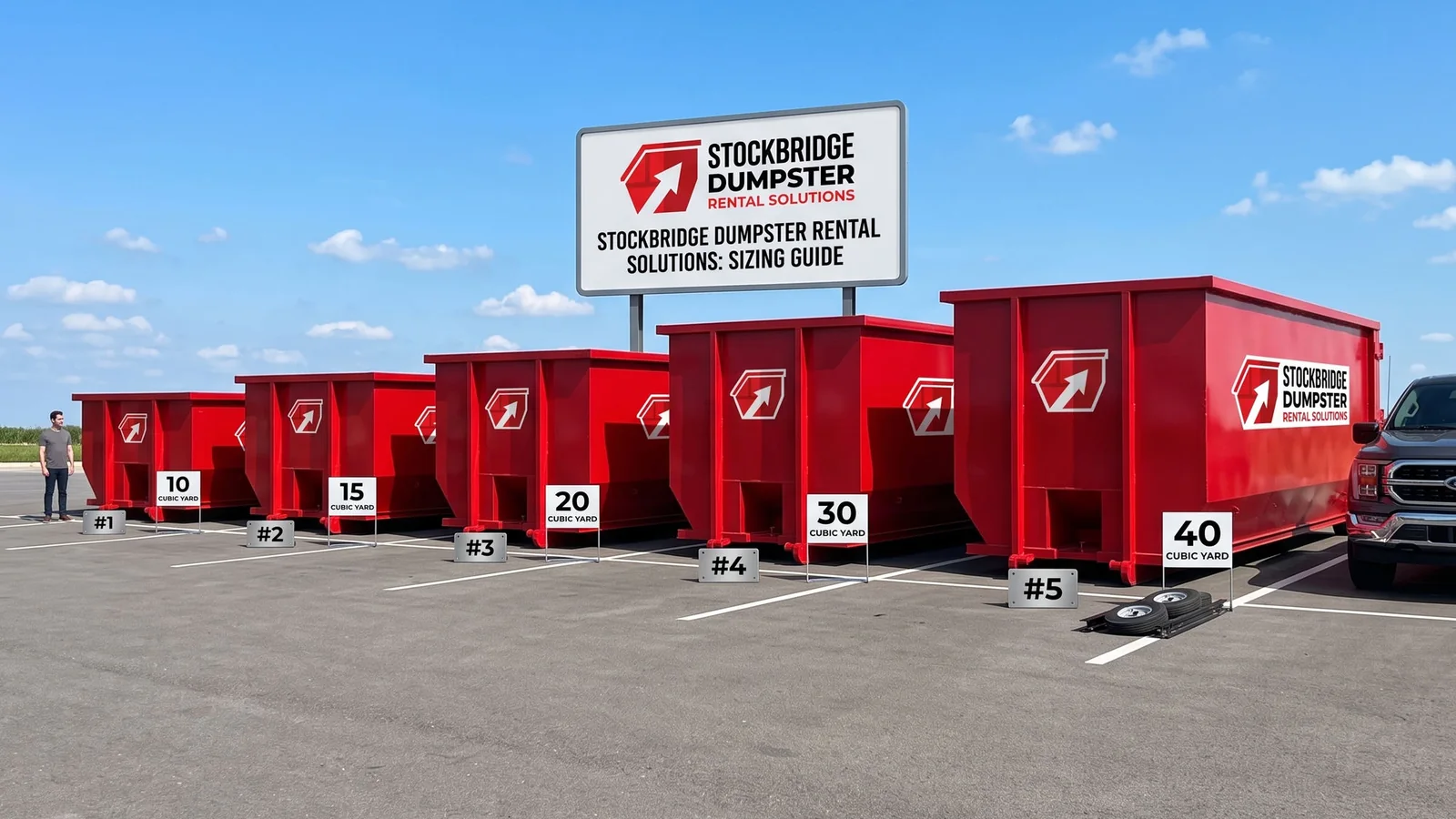
Dumpster Sizes in Stockbridge, GA
From a compact 10 yard for heavy debris to a massive 40 yard for demolition — compare capacities, dimensions, and typical projects to pick the perfect fit.
Every Size We Offer, Side by Side
The right container makes your project cheaper and easier; the wrong one means a second trip or wasted money. Use the guide below, then call us to confirm — we size projects every day and we're glad to help you get it right the first time.
| Size | Length | Capacity | Best For | Typical Projects |
|---|---|---|---|---|
| 10 Yard | 12–14 ft L | ≈ 3 pickup truck loads | Heavy debris, small spaces | Concrete, dirt, single-room cleanouts, small bathroom remodels |
| 15 Yard | 16 ft L | ≈ 4–5 pickup truck loads | Mid-size cleanouts | Flooring removal, deck teardowns, garage cleanouts, roofing (small) |
| 20 Yard | 22 ft L | ≈ 6 pickup truck loads | The versatile favorite | Whole-home cleanouts, roofing, large room remodels, moving purges |
| 30 Yard | 22 ft L | ≈ 9 pickup truck loads | Large-scale projects | Major renovations, new construction, big cleanouts, additions |
| 40 Yard | 22 ft L | ≈ 12 pickup truck loads | Maximum volume | Commercial jobs, demolition, whole-house remodels, high-volume sites |
Explore Each Size in Detail
Tap any container for dimensions, ideal uses, what fits inside, and pricing guidance.
Still deciding? Call us and describe your project — we'll recommend a size in under a minute. (470) 878-2988
A Simple Way to Think About Dumpster Sizes
The number on a roll-off — 10, 20, 40 — refers to its capacity in cubic yards, not tons or feet. A cubic yard is roughly the volume of a standard washing machine, so a 20 yard dumpster holds about twenty of those. Length grows with size, but the biggest jump between the tall containers is height: a 30 and 40 yard share a footprint with the 20, they just stack higher for lightweight, bulky debris.
That distinction matters because of weight. Heavy materials — concrete, brick, dirt, wet roofing — reach a container's weight limit long before they fill it, which is why we steer dense loads toward a 10 or 15 yard. Light, voluminous debris like household junk, cabinetry, and framing offcuts is where the 30 and 40 yard shine. Match the container to the type of debris, not just the amount, and you'll never overpay.
Quick tip: When you're between two sizes, the cost difference to go up one is almost always less than the cost of renting a second dumpster because the first was too small. If in doubt, size up — or better yet, call and let us do the math for you.
Choosing a Size — FAQs
What's the most popular dumpster size?
The 20 yard is our most-rented size because it balances capacity and cost for the majority of home and light-commercial projects — from cleanouts to roofing.
How do I avoid renting the wrong size?
Call and describe your project. After thousands of deliveries we can usually recommend the ideal size in under a minute, so you don't overpay for space or run out of room. Reach us at (470) 878-2988.
What if I underestimate and need more room?
No problem — we can deliver an additional container or arrange a swap, often the same day. It's always easier to call than to overstuff a container past its fill line, which we can't legally haul.
Does a bigger dumpster mean I can add more weight?
Not necessarily. Every size has an included weight allowance, and heavy materials like concrete and dirt hit that limit fast regardless of volume. For dense debris we often recommend a smaller container to stay within weight.
Still Not Sure Which Size You Need?
One quick call and we'll recommend the perfect container for your project and budget.
(470) 878-2988